

The wall system you pick for a cleanroom is usually decided once and lived with for years. It sets the achievable ISO class, delivery speed, operating cost and whether it can be extended when production scales. For most buyers the question is which configuration fits the process, budget and timeline. This guide compares modular, hardwall, softwall and clean booth configurations and maps each to where it makes sense. GCC CleanSwan engineers all four as part of an integrated clean environment platform; the trade-offs below reflect project experience.
Key Takeaways
- The cleanroom wall system sets the achievable ISO class, cost, lead time and future flexibility.
- Modular cleanrooms suit permanent facilities and are easy to expand.
- Softwall cleanrooms are budget-friendly but limited to ISO 7-8 local protection.
- Clean booths create a localized ISO 5 zone inside a larger room.
What to evaluate before choosing a cleanroom type
No wall system compensates for a wrong specification, so work through these six factors first.
Target ISO class
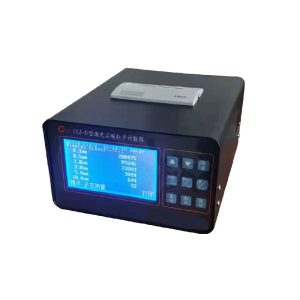
ISO 14644-1 classes cap airborne particle concentration in a defined state. An ISO 5 zone allows 3,520 particles of 0.5 µm and larger per cubic meter; ISO 7 allows 352,000; ISO 8 allows 3.52 million. A whole-room ISO 5 requirement is a different engineering problem from a localized ISO 5 workstation inside an ISO 8 shell. Whatever class you claim, verify it during commissioning with a discrete particle counter such as the MST-5100XPro 100 L/min particle counter, per ISO 14644-3.
Contamination risk and process sensitivity
What is being protected, and from what? Semiconductor work cares about sub-0.1 µm particles and outgassing. Aseptic filling cares about viable particles and airflow patterns. General assembly cares mostly about dust and lint. The wall system matters most where particle shedding and surface chemistry are genuine process risks.
Budget and total cost of ownership
Capital cost is only the first number. Air change rates dominate energy use; filter replacement, cleaning and future reconfiguration belong in the comparison too. A softwall replaced in two years is rarely cheaper than a modular room amortized over ten.
Lead time
If the line starts in eight weeks, a bespoke hardwall build is not an option. If the horizon is nine months, lead time barely matters.
Flexibility to expand
Production rarely shrinks. A modular panel system extends, relocates and reconfigures with limited disruption. Fixed constructions do not.
Regulatory requirements
GMP facilities, including those aligned with EU Annex 1, carry expectations on material cleanability, joint integrity, pressure cascade and documentation. Curtain-based enclosures generally do not satisfy critical GMP zones. Whichever system you choose must be qualified (IQ, OQ, PQ) and re-verified regularly.
Modular cleanrooms
A modular cleanroom is built from prefabricated sandwich panels: two metal faces over a rigid core of aluminum honeycomb, galvanized steel or stainless steel 304 for washdown areas. Surfaces are smooth, low-shedding and low-outgassing, and gasketed joints keep the envelope tight and cleanable. Panels bolt together on site, so the room installs in weeks and can be dismantled and reused if the facility moves. This is the basis of most GMP cleanroom wall systems.
Cleanliness depends on the air handling design as much as the panel. With an FFU ceiling system or a central AHU supply, modular construction holds ISO 5 through ISO 8 without difficulty. That makes modular the default for permanent facilities: laboratories, pharmaceutical production, electronics assembly and food processing, and usually the best cost-to-performance ratio of the permanent options.
Hardwall cleanrooms
A hardwall cleanroom uses rigid, fixed construction: gypsum or plasterboard partitions finished with sealed coatings, or metal-faced walls erected in place. In operation it performs much like a modular room, reaching the same ISO 5 to ISO 8 range when the HVAC design is right.
Hardwall is usually cheaper per square meter on first cost, but the build is slower, wet trades and painting add schedule risk, and every change means demolition. It suits facilities where the layout is final and the budget is fixed. If expansion or relocation is plausible, the first-cost saving rarely justifies the lost flexibility.
Softwall cleanrooms
A softwall cleanroom encloses a zone with PVC or vinyl curtains suspended from a ceiling-mounted frame or FFU plenum. It is the lowest-cost option, ships quickly and erects in days. With HEPA-filtered air supplied from above, a softwall enclosure holds a local ISO 7 or ISO 8 environment inside a dirtier shell, which suits inspection stations, packaging lines and prototype work.
Softwall has hard limits. Curtains cannot maintain the airtight integrity, pressure cascade or cleanability that aseptic and critical GMP operations require, so do not specify softwall where sterile or low-bioburden processing is involved. Curtains also wear and trap contamination if replacement is neglected. Treat softwall as a fast, reversible cleanliness zone, not a permanent controlled environment.
Clean booths and laminar flow booths
A clean booth, also called a laminar flow booth or workstation, protects a small critical zone rather than a whole room. A fan filter unit delivers HEPA H14 or ULPA filtered air through the working area, usually in unidirectional flow, holding a localized ISO 5 environment at the point of handling. Booths install inside an existing room with no structural work, the standard answer for aseptic filling points, sample weighing, powder dispensing and cell culture handling.
The trade-off is coverage. A booth protects the work surface, not the surrounding space, and the background room must be at least ISO 8 for a localized ISO 5 claim to hold. Where the critical operation is confined to a bench or machine, a clean booth delivers ISO 5 protection at a fraction of the cost of a full ISO 5 room.
Cleanroom construction comparison at a glance
| Criterion | Modular | Hardwall | Softwall | Clean booth |
| — | — | — | — | — |
| Relative cost | Medium to high | Medium | Low | Low to medium |
| Lead time | Weeks | Months | Days | Days |
| Cleanliness level | ISO 5 to 8 | ISO 5 to 8 | Local ISO 7 to 8 | Local ISO 5 |
| Flexibility | High, relocatable panels | Low, fixed | High, reversible | High, portable |
| Expansion | Panel by panel | Demolition required | Add another bay | Add another booth |
Figures are indicative; the class you achieve depends on airflow design, air change rates and testing, not the wall type alone.
How to decide: application-based recommendations
Semiconductor R&D
Processes change constantly, tool layouts move and new lines appear as yields improve. Choose modular with an FFU ceiling system, targeting ISO 5 to ISO 7 depending on the step. Reconfiguring walls without demolition is worth more than any first-cost saving.
Pharmaceuticals
GMP compliance dominates. Choose modular or hardwall with smooth, validated, cleanable surfaces and documented materials, sized for whole-room ISO 7 or ISO 8 with localized ISO 5 protection at critical exposure points. Modular shortens the schedule and simplifies revalidation after changes.
Industrial applications
For a controlled zone around a filling line, packaging station or inspection point inside an existing factory, a softwall enclosure at ISO 7 to ISO 8 is usually the right spend. Where the critical operation is a single workstation, use a clean booth. Reserve full modular construction for whole-room requirements or GMP-adjacent processes.
Conclusion
Permanent whole-room cleanliness: modular. Fixed layout with a hard budget: hardwall. Fast local zones: softwall. Small critical workstations: clean booth. The expensive mistakes come from treating one type as universally superior, or from skipping verification of the achieved class. Commission whatever you select with ISO 14644-3 classification testing and document the results before production starts.
GCC CleanSwan supplies all four configurations, FFU ceiling systems, contamination control consumables, analytical services and qualification support, backed by GCC Group’s 20+ years in clean environment engineering. Send us the process description, target ISO class and floor plan; we will recommend a configuration, budget it and qualify it to your standard.
Need the right instrument for your application?
Talk to our engineers about specifications, documentation, calibration traceability and qualification support. We respond within one business day.
Frequently Asked Questions
What is the difference between modular and hardwall cleanrooms?
Modular cleanrooms use prefabricated sandwich panels assembled on site, offering flexibility and scalability. Hardwall cleanrooms use fixed rigid construction. Both achieve ISO 5-8; modular is faster to install and easier to expand.
When is a softwall cleanroom acceptable?
Softwall cleanrooms (curtain walls) suit local ISO 7-8 protection zones with moderate contamination requirements and limited budgets. They are not suitable for aseptic or GMP critical processes.
What is a clean booth used for?
A clean booth or laminar flow booth creates a localized ISO 5 environment within a larger room, ideal for workstations, small critical processes and sampling points.
Which cleanroom type is best for semiconductor R&D?
Modular cleanrooms with FFU ceilings are the common choice for semiconductor R&D: they reach ISO 5-7, expand with research needs, and support the particle and AMC control semiconductor processes require.