

Product Overview
Critical Performance
0.0001% detection sensitivity — catches pinhole leaks other photometers miss. Essential for GMP audit compliance and biosafety cabinet certification.
The GCC-WIT-2ii is a compact, portable aerosol photometer engineered for HEPA/ULPA filter integrity testing and in-situ leak detection in pharmaceutical manufacturing, food production, semiconductor fabs, and other controlled environment industries.
The instrument detects defects including pinholes in filter media, frame sealing issues, gasket leakage, and structural leakage at filter housing interfaces. By comparing upstream and downstream aerosol concentrations, the WIT-2ii enables rapid identification of leakage points. A 3.5-inch handheld scanning probe allows operators to accurately locate remote or hard-to-reach areas, with automatic audible and visual alarms when leakage exceeds preset thresholds.
Why It Matters: With a detection sensitivity of 0.0001% and ±1% reading accuracy, the WIT-2ii delivers reliable HEPA/ULPA filter validation compliant with ISO 14644, IEST, and NSF 49 standards — essential for GMP audits, cleanroom commissioning, and biosafety cabinet certification.
Key Features
0.0001% Sensitivity
Detects minute filter leaks with 0.0001% display resolution for rigorous HEPA/ULPA validation requirements.
5″ Color Touchscreen
Intuitive LCD interface with real-time leak rate display, fast data processing, and clear visual feedback.
Handheld Scanning Probe
3.5-inch portable probe with synchronized display and one-key operation for locating remote leakage points.
Audible & Visual Alarm
Automatic alarm triggers with sound and light indicators when measured leakage exceeds preset thresholds.
Auto Up/Downstream Switch
Automatic switching between upstream and downstream aerosol concentration measurements for efficient testing.
100K Record Storage
High-capacity data storage supporting continuous, storage (up to 6,000 records), and printing report modes.
±1% Reading Accuracy
Precision photometer measurement with ±1% accuracy of reading across the full 0.0001% – 100.0% range.
Portable Field Design
Compact 9.8 kg main unit (10.3 kg with probe) designed for on-site filter testing and field operation.
Key Parameter
±1% accuracy across the full 0.0001% – 100.0% range — the widest dynamic range in its class. Verified against NIST-traceable calibration standards.
Technical Specifications
Applications
Pharmaceutical
GMP cleanroom HEPA/ULPA filter validation and routine testing
Biosafety Cabinets
NSF 49 compliance testing and field certification
Semiconductor
Cleanroom filter integrity verification and commissioning
Food & Beverage
Production facility air filtration system testing
Medical Device
Controlled environment qualification and audit support
HVAC Systems
Filter installation commissioning and maintenance verification
Best Practice
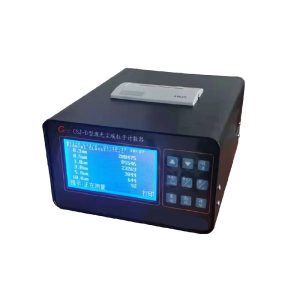
For pharmaceutical GMP facilities: pair the WIT-2ii with our GCC-CSJ-DⅡ particle counter for complete cleanroom validation — filter integrity + particle counting in one audit session.
Compliance Insight
ISO 14644-3 requires filter leak testing as part of cleanroom classification. The WIT-2ii meets all IEST-RP-CC034 photometer performance requirements for validated results.
Standards Compliance
Why Choose GCC Cleanswan
Factory Direct Supply
Direct from manufacturer with competitive pricing. No middleman costs.
Global Export Experience
Equipment delivered to 50+ countries. Experienced with international compliance.
Engineering Support
Dedicated engineers for pre-sales consultation and after-sales assistance.
Quality Control
Every unit calibrated and tested before shipment for reliable performance.
Fast Response
Quotation within 24 hours. WhatsApp and email support for urgent inquiries.
Customized Solutions
Tailored configurations and accessory packages for specific project requirements.
Important Note
Always use the correct aerosol type (PAO/DOP/DEHS) for your industry. Pharmaceutical facilities typically use PAO; semiconductor fabs may require specific low-residue aerosols. Check your internal SOPs before testing.
Frequently Asked Questions
Q
What is the detection sensitivity of the GCC-WIT-2ii?
The WIT-2ii features a display range of 0.0001% to 100.0%, enabling detection of extremely small filter leaks. This sensitivity level meets the stringent requirements for HEPA and ULPA filter integrity testing in pharmaceutical GMP and semiconductor cleanroom environments.
Q
What aerosol types are compatible with the WIT-2ii?
The WIT-2ii supports PAO (polyalphaolefin), DOP (dioctyl phthalate), DEHS (diethylhexyl sebacate), and other polydisperse aerosols commonly used for HEPA/ULPA filter testing. The instrument is calibrated for consistent measurement accuracy across all supported aerosol types.
Q
Is the WIT-2ii suitable for NSF 49 biosafety cabinet testing?
Yes. The WIT-2ii is fully compliant with NSF 49 standards for biosafety cabinetry field certification. It is widely used for in-situ filter leak detection in Class II biological safety cabinets, laminar flow workstations, and other containment devices requiring periodic filter integrity verification.
Q
How many test records can the WIT-2ii store?
The instrument supports up to 100,000 total measurement records. In storage mode, up to 6,000 records can be saved per test session. Data can be exported for reporting and compliance documentation. The device also supports continuous real-time monitoring and direct printing modes.
Q
What is the handheld scanning probe used for?
The 3.5-inch handheld scanning probe enables operators to scan filter surfaces, frame seals, and gasket interfaces to precisely locate leakage points. The probe features a synchronized display and one-key operation, making it easy to identify remote or hard-to-reach defects during in-situ testing.
Q
What is the recommended calibration interval?
We recommend annual calibration to maintain measurement traceability and compliance with ISO 14644 and IEST standards. GCC provides factory calibration services using traceable reference standards to ensure ongoing accuracy for regulatory audits and quality assurance programs.
Reviews
There are no reviews yet.