

For sterile manufacturers, environmental monitoring (EM) is the evidence that a facility can repeatedly produce product in a controlled state. The revised EU GMP Annex 1, published in August 2022 and applicable since 25 August 2023, tightened expectations across the board: Contamination Control Strategy (CCS), continuous particle monitoring, smoke studies, excursion investigation, and data integrity. This guide covers the revised requirements, the cleanroom grade limits, and the instrumentation that keeps a qualification programme defensible at inspection.
Key Takeaways
- The revised Annex 1 makes the Contamination Control Strategy the backbone of aseptic manufacturing.
- Grade A areas allow 3,520 particles/m3 at 0.5 um and 20 particles/m3 at 5 um.
- Continuous particle monitoring is expected in Grade A and B zones.
- Smoke studies, excursion investigation and data integrity are inspection focus areas.
What the 2022/2023 Annex 1 revision changed
The 2022 revision replaced the 2008 text and reshaped EM programmes:
- The Contamination Control Strategy (CCS) became a mandatory, documented deliverable.
- Continuous particle monitoring is now expected for Grade A and B zones, in operation as well as at rest.
- Smoke studies are explicitly required to demonstrate unidirectional airflow and evaluate interventions.
- Excursion investigation and systematic trending are integral to the monitoring system.
- Data integrity requirements aligned with Annex 11 and Part 11 apply to all EM records.
The Contamination Control Strategy (CCS)
The CCS is the cornerstone of the revised Annex 1: a documented assessment of all contamination controls, covering facility and HVAC design, utilities, raw materials, personnel flows, process operations, cleaning and disinfection, and the monitoring programme itself.
The CCS must be referenced in the Pharmaceutical Quality System, reviewed periodically, and updated when processes or equipment change. For EM specifically, the CCS must justify sampling locations, frequencies, alert and action limits, and the methods in use. A monitoring programme that cannot be traced to the CCS will be challenged at inspection.
Grade A, B, C and D classification limits
Annex 1 distinguishes classification from monitoring: classification is a defined state demonstrated during qualification, while monitoring is ongoing measurement during routine operation. Both are mandatory. Table 1 of the revised Annex 1 sets the particle limits, matching ISO 14644-1 classes in the relevant size ranges:
| Grade | At rest, ≥0.5 µm/m³ | At rest, ≥5.0 µm/m³ | In operation, ≥0.5 µm/m³ | In operation, ≥5.0 µm/m³ |
|——-|———————|———————|————————–|————————–|
| A | 3,520 | 20 | 3,520 | 20 |
| B | 3,520 | 29 | 352,000 | 2,900 |
| C | 352,000 | 2,900 | 3,520,000 | 29,000 |
| D | 3,520,000 | 29,000 | Not defined* | Not defined* |
*Grade D in-operation limits are not defined in Annex 1; manufacturers must set and justify risk-based limits in the CCS.
Three details matter. Grade A limits are identical at rest and in operation, so any excursion above the limits during processing is significant. Grade B in-operation limits are one hundred times the Grade A values, reflecting personnel activity in the surrounding area. For Grade D in operation the standard is deliberately silent, leaving justification to the manufacturer.
Viable monitoring methods and limits
Viable monitoring relies on complementary methods; no single technique captures the full picture. Annex 1 Table 2 gives recommended limits in colony-forming units:
| Grade | Settle plate, 90 mm, ≥4 h | Active air sampler, CFU/m³ | Contact plate, 55 mm | Glove print, 5 fingers |
|——-|—————————|—————————-|———————-|————————|
| A | <1 | <1 | <1 | <1 |
| B | 5 | 10 | 5 | 5 |
| C | 50 | 100 | 25 | Not defined |
| D | 100 | 200 | 50 | Not defined |
Settle plates are exposed for at least four hours at critical locations and high-risk intervention points. Active air samplers provide the volumetric data needed for Grade A and B areas. Contact plates and glove prints address surfaces and personnel, two vectors the revised Annex 1 treats seriously. Isolates from Grade A and B areas should be identified to species level, and media growth promotion documented.
Continuous particle monitoring for Grade A and B
The revised Annex 1 requires continuous particle monitoring in Grade A and B zones, at rest and in operation. For Grade A, monitoring runs for the full duration of critical processing, including equipment assembly and set-up. In practice this calls for a 100 L/min particle counter per location, collecting a 1 m³ sample in ten minutes, the volume needed for meaningful excursion detection.
The system should alarm on limit breaches, record continuously, and correlate excursions with activities and interventions. For isolators, monitoring is typically continuous for the entire cycle; for RABS, the same logic applies within the protection envelope.
Monitoring of compressed gases
Compressed gases that contact the product, product-contact surfaces, or the environment must be monitored for particles, viable contamination, moisture, oil, and purity per pharmacopoeial requirements and the CCS. Checks follow a risk-justified schedule, and results are recorded with the same data integrity rigour as cleanroom measurements. Gases remain a frequently under-audited vector; inspectors now look for them explicitly.
Smoke studies for airflow visualisation
Smoke studies demonstrate that airflow in Grade A and B areas is unidirectional, stable, and free of turbulence and stagnant zones. Annex 1 requires them at rest and in operation, including during typical interventions such as set-up, transfers, and equipment adjustments.
Video evidence is retained in the qualification record. Re-qualification frequency is defined by risk; studies must also be repeated after significant changes to the HVAC system, room configuration, or equipment layout.
Alert and action limits and investigations
Alert and action limits are established from historical data, justified in the CCS, and reviewed periodically. An alert limit excursion signals drift and needs evaluation. An action limit excursion demands immediate investigation, root cause analysis, and corrective and preventive action. Annex 1 is explicit that any excursion may affect product quality, so the investigation must consider product, process, and facility, not only the monitoring result.
Data integrity and trending
EM programmes generate high volumes of electronic data, a frequent target in data integrity inspections. Records must satisfy ALCOA+: attributable, legible, contemporaneous, original, and accurate, with complete, consistent, enduring, and available audit trails. Instrument clocks, user access controls, and audit log reviews fall in scope.
Trending is equally non-negotiable: data must be trended to catch gradual deterioration before an excursion, and reviews feed the periodic quality review. A programme that only reacts to action limit breaches does not meet the revised Annex 1.
Instrumentation that supports Annex 1 compliance
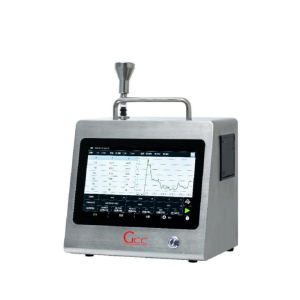
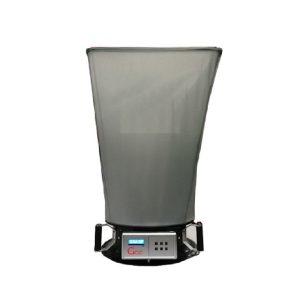
Qualified instruments turn a monitoring plan into defensible data. Continuous Grade A monitoring needs a 100 L/min particle counter with reliable low-count accuracy, such as the MST-5100XPro 100 L/min particle counter, reaching the 1 m³ sample volume in ten minutes. Active volumetric samplers deliver the CFU/m³ data required for Grade B, C, and D areas. HEPA filter integrity testing underpins Annex 1 facility qualification, and a calibrated GCC-WIT-2ii aerosol photometer supports leak testing of terminal filters and safety cabinets. Unidirectional airflow velocity checks during qualification and re-qualification are executed with a thermal anemometer such as the GCC-FL-A1 airflow meter.
All monitoring instruments must be calibrated to traceable standards and qualified through IQ, OQ, and PQ before their data supports release decisions.
Conclusion
Annex 1 environmental monitoring is a closed loop. The CCS defines the risk, classification and qualification set the baseline, continuous monitoring and trending detect drift, and investigations close the loop with corrective action. Every step depends on defensible data and properly qualified instrumentation.
GCC CleanSwan provides ISO and GMP compliant clean environment, contamination control, analytical, and qualification solutions for pharmaceutical, biotechnology, and advanced manufacturing clients, backed by the GCC Group’s 20+ years of experience. Whether you are building a new monitoring programme or upgrading an existing one to the 2023 expectations, our particle counters, microbial samplers, aerosol photometers, and airflow meters are qualified for regulated environments. Contact our team to discuss your environmental monitoring and cleanroom qualification needs.
Need the right instrument for your application?
Talk to our engineers about specifications, documentation, calibration traceability and qualification support. We respond within one business day.

Frequently Asked Questions
What changed in the 2023 EU GMP Annex 1 revision?
The revised Annex 1 strengthens the Contamination Control Strategy (CCS), expects continuous particle monitoring in Grade A and B areas, emphasizes smoke studies, excursion investigation and data integrity.
What are the Grade A cleanroom particle limits?
Grade A requires no more than 3,520 particles/m3 at >=0.5 um and 20 particles/m3 at >=5 um, both at-rest and in-operation.
Is continuous particle monitoring mandatory?
Under the revised Annex 1, continuous monitoring systems are expected in Grade A and B zones, with alarms for excursions and data review as part of the CCS.
What microbial limits apply to Grade A areas?
Grade A allows less than 1 CFU per settle plate (90 mm, 4 hours) and less than 1 CFU/m3 for active air sampling. Limits for Grade B, C and D are progressively higher.