

GMP Environmental Monitoring: What, Where, and How Often to Sample
Environmental monitoring is the backbone of aseptic manufacturing. Under GMP, it is the systematic sampling and testing of air, surfaces, and personnel that proves a cleanroom remains within defined limits — and it is the first thing regulators review after a deviation. For pharmaceutical laboratories, cleanrooms, hospitals, and research institutions, a sound environmental monitoring program is both a compliance requirement and an early-warning system. This guide covers what to monitor, where to sample, how often, and the instruments that make the data defensible.
What GMP Environmental Monitoring Covers
A complete program addresses physical and biological contamination. EU GMP Annex 1 (2022 revision) frames four related areas.
Non-viable particulates
Airborne particles at ≥0.5 µm and ≥5.0 µm, measured with laser particle counters. The larger channel is especially valuable: in a well-filtered cleanroom, unexpected ≥5.0 µm counts often signal microbial growth, operator shedding, or failing filtration.
Viable particulates
Microorganisms — bacteria, yeast, and mould — recovered from air, surfaces, and personnel, reported as colony-forming units (CFU). Viable and non-viable particle monitoring are complementary: particles indicate risk; CFU confirm whether it materialised.
Surfaces and personnel
Contact plates sample walls, floors, and equipment; glove prints and gown checks monitor operators — the largest contamination source in any cleanroom.
Compressed gases
Annex 1 also requires monitoring of process gases used in critical steps — nitrogen blankets, transfer lines — for particles, moisture, and microbial content where they contact product.
All of this is documented in a written environmental monitoring program: locations, methods, frequencies, and limits, each justified by risk assessment.
Non-Viable Particle Monitoring: ISO 14644 and EU GMP Grades
Cleanroom classification follows ISO 14644-1; EU GMP grades map onto ISO classes (values are particles per cubic metre):
| EU GMP Grade | ≥0.5 µm at rest | ≥5.0 µm at rest | ≥0.5 µm in operation | ≥5.0 µm in operation |
|—|—|—|—|—|
| A | 3,520 | 20 | 3,520 | 20 |
| B | 3,520 | 29 | 352,000 | 2,900 |
| C | 352,000 | 2,900 | 3,520,000 | 29,000 |
| D | 3,520,000 | 29,000 | Not specified | Not specified |
Grade A corresponds to ISO 5 but is held to a tighter ≥5.0 µm limit of 20/m³ in operation, reflecting the 2022 Annex 1 expectation that the filling zone is monitored continuously during processing. Grades B, C, and D at rest correspond to ISO 5, ISO 7, and ISO 8 respectively.
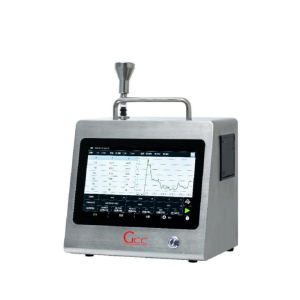
Two approaches are used: continuous monitoring with remote sensors in Grade A and B zones during operations, and periodic monitoring with portable counters for classification, re-qualification, and investigations. Sample volume matters — Annex 1 expects at least 1 m³ per sample in Grade A and B, which is why 100 L/min instruments are common there.
Viable Monitoring Methods and Limits
Four methods dominate, each with a defined role:
- **Settle plates (90 mm)** — passively capture particles depositing onto surfaces; exposed for the critical operation, never more than 4 hours.
- **Active air samplers** — draw a measured air volume (commonly 1 m³) onto agar for a quantitative CFU/m³ result.
- **Contact plates (55 mm)** — sample floors, walls, equipment, and product-contact surfaces.
- **Glove prints and gown sampling** — check operator contamination, usually at the end of a shift or batch.
Annex 1 recommends the following microbial limits per grade, in CFU:
| Grade | Settle plate (90 mm, 4 h) | Active air (CFU/m³) | Contact plate (55 mm) | Glove print |
|—|—|—|—|—|
| A | <1 | <1 | <1 | <1 |
| B | 5 | 10 | 5 | 5 |
| C | 50 | 100 | 25 | Not specified |
| D | 100 | 200 | 50 | Not specified |
The Grade A requirement of <1 CFU is the strictest: no growth is expected in the filling zone; any recovery triggers an investigation.
Where to Sample
Sampling locations follow risk, not convenience: monitor where the product is exposed and where contamination is most likely.
- **Critical zones** — the Grade A filling or aseptic processing area at the point of product exposure: stopper bowls, transfer points, and operator interventions.
- **Worst-case locations** — downstream of HEPA filters, near doors and air returns, in stagnant corners, and in high-traffic corridors.
- **At working height** — sample where the product is exposed, not just at ceiling level; in Grade A, unidirectional airflow is typically verified at 0.36–0.54 m/s.
- **Surfaces and personnel** — product-contact surfaces, equipment, and the gloves and gowns of operators closest to the product.
Locations are fixed on a plan; any change is justified by risk assessment or investigation findings.
How Often to Sample
Annex 1 sets clear minimum expectations for cleanroom monitoring frequency:
- **Grade A** — continuous particle monitoring (both ≥0.5 µm and ≥5.0 µm channels) for the full duration of critical processing, including equipment assembly; settle plates throughout the critical operation (maximum 4 hours); active air at least once per batch or shift.
- **Grade B** — particle monitoring at a similar frequency; viable monitoring at least once per batch or shift.
- **Grades C and D** — periodic monitoring, with frequency set by risk assessment, historical data, and room activity.
- **Re-qualification** — rooms are re-classified at rest and in operation at defined, justified intervals and after significant changes or maintenance.
- **Continuous versus periodic** — remote sensors give real-time assurance during operations; portable counters verify classification and support investigations.
Alert and Action Limits
Every result needs a pre-defined threshold, and two levels are standard:
- **Action limits** come from the regulatory tables — typically Annex 1 classification values — and mark the boundary that must not be exceeded during operation.
- **Alert limits** are derived from historical data, often 50% of the action limit or a statistical percentile, giving early warning of drift.
An alert triggers review and extra sampling; an action-level excursion triggers a formal investigation, corrective action, and impact assessment for any product exposed.
Data Trending and Investigation
Regulators expect trending, not filing. Plot results over time to catch upward drift, seasonal patterns, or problems tied to operators, shifts, or rooms — before a limit is breached. Every excursion needs a documented root-cause investigation, corrective and preventive actions, and product impact assessment. Instruments with audit trails and 21 CFR Part 11-compliant software make this defensible; paper logbooks do not.
Instruments Used for GMP Environmental Monitoring
The core instrument set is compact:
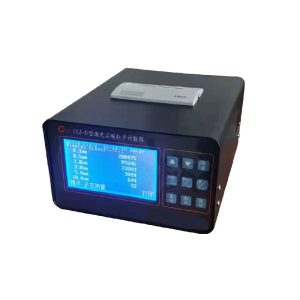
- **Laser particle counters** — portable units for periodic classification; remote sensors for continuous Grade A/B monitoring.
- **Microbial air samplers** — for quantitative viable air sampling.
- **Aerosol photometers** — for HEPA filter integrity (leak) testing, proving the cleanroom performs as designed.
- **Airflow meters (anemometers)** — to verify air velocity and unidirectional flow in critical zones.
Building a Compliant Monitoring Program
A defensible program is documented, risk-based, and correctly instrumented: fix the locations, set alert and action limits from data, sample at Annex 1 frequencies, trend everything, and investigate every excursion.
GCC Cleanswan, part of the GCC Group with more than 20 years in controlled environments, supplies the instruments that make this practical. The CSJ-D2 portable particle counter covers routine portable sampling and room classification; the MST-5100XPro 100 L/min particle counter delivers the high sample volumes expected in low-limit Grade A and B areas; the GCC-WIT-2ii aerosol photometer handles HEPA filter integrity testing; and the GCC-FL-A1 airflow meter verifies air velocity and airflow patterns. See the full range at GCC Cleanswan.
Need the right instrument for your application?
Talk to our engineers about specifications, documentation, calibration traceability and qualification support. We respond within one business day.
Frequently Asked Questions
What does GMP environmental monitoring include?
It covers non-viable particulates (airborne particle counts per ISO 14644), viable microorganisms (settle plates, active air sampling, contact plates), surface contamination and personnel monitoring in classified areas.
How often should environmental monitoring be performed?
Risk-based. EU GMP Annex 1 expects continuous particle monitoring in Grade A and B areas, microbial monitoring during each batch, and periodic surface and personnel monitoring. Frequency is justified in the contamination control strategy.
What are alert and action limits?
Alert limits signal a drift toward abnormal conditions; action limits require immediate investigation and intervention. Limits are set based on historical data and regulatory guidance, and must be periodically reviewed.
Which instruments are used for GMP monitoring?
Portable or continuous particle counters for non-viable counts, microbial air samplers and settle plates for viable counts, aerosol photometers for HEPA integrity, and airflow meters for HVAC verification.